If you want an attached home on the Peninsula without jumping to some of the highest price points nearby, downtown South San Francisco deserves a close look. You may be weighing commute time, monthly costs, building quality, and long-term value all at once, which can make condos and townhomes feel harder to compare than single-family homes. This guide will help you understand what downtown South San Francisco offers, what to watch for in HOA documents, and how this market stacks up against nearby cities. Let’s dive in.
Why downtown South San Francisco stands out
Downtown South San Francisco is one of the city’s most relevant areas for condos and townhomes because local planning continues to support higher-density, mixed-use housing near the core. State housing-element documentation describes downtown as a historic, fine-grained mixed-use area that the city wants to reinforce as the physical and symbolic center of South San Francisco. That helps explain why attached housing options are concentrated here.
The city’s land-use framework also points to continued focus on denser residential development around downtown-adjacent areas. Designations such as Downtown Residential Core, Downtown Transit Core, Grand Avenue Core, medium-density residential, medium-high-density residential, and high-density mixed-use all support the idea that this is a key submarket for buyers who want a more urban, connected lifestyle.
Who downtown housing fits best
Downtown South San Francisco can make sense if you want lower-maintenance living with easier access to transit, daily services, and job centers. It may also appeal if you value a lock-and-leave setup over the upkeep that often comes with a detached home. For many buyers, that convenience is a major part of the value.
The area is especially relevant for people who work nearby. South San Francisco remains a major biotech employment center, and the city reports more than 250 biotech companies along with 3.5 million square feet of biotech space under construction. If your goal is to live closer to work, that employment base is one reason downtown housing continues to draw attention.
Condo and townhome styles you’ll find
One of the biggest strengths of this market is variety. Downtown South San Francisco is not defined by a single building era or one standard product type. Instead, you will find a mix of older condos with simpler amenity packages and newer buildings with more modern features.
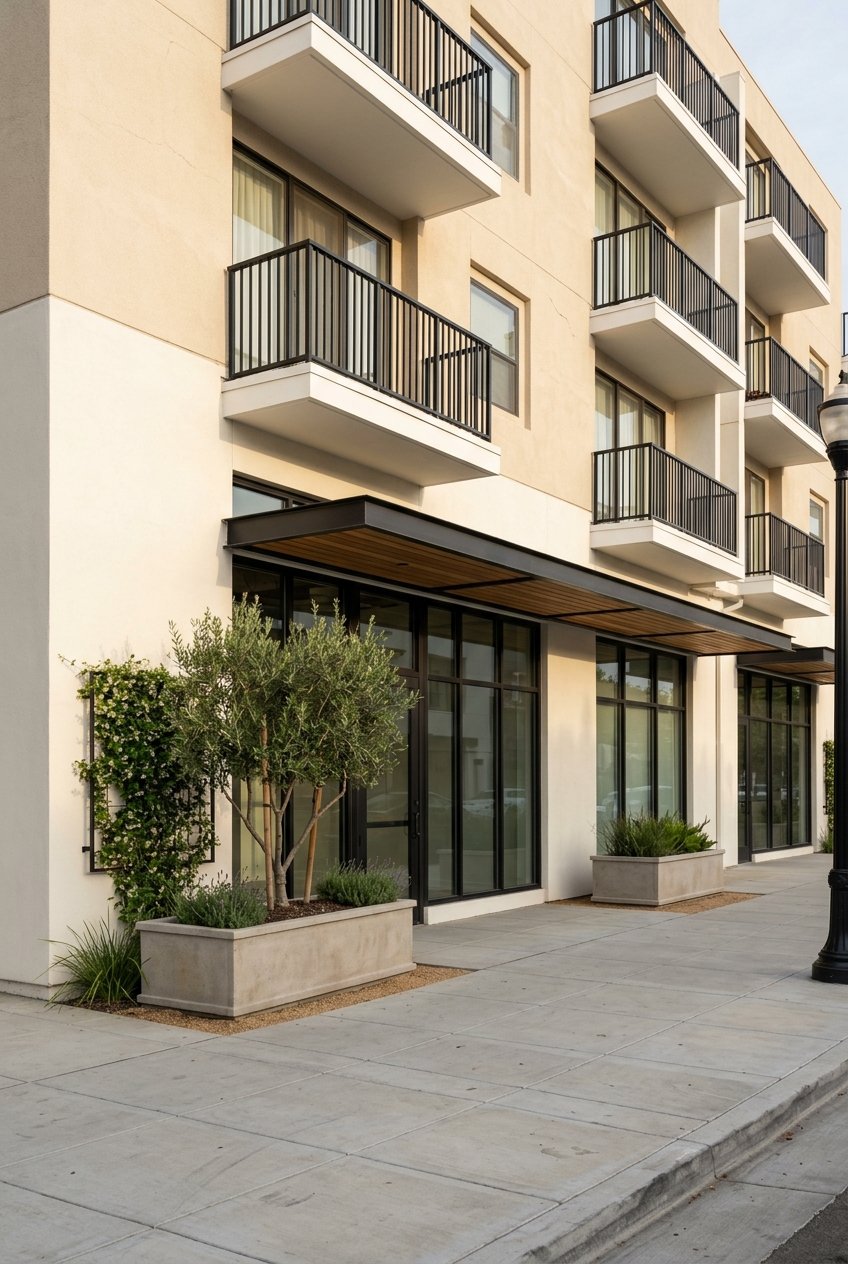
For example, listing samples show an older downtown or Old Town condo at 303 Pine Ave built in 1964 with a more basic setup that includes on-site laundry. On the newer end, The Linden at 200 Linden Ave was built in 2021 and includes 97 units with features such as a sky lounge and terrace, courtyard, clubhouse, outdoor fireplace, barbecue stations, full kitchen, entertainment lounge, deeded parking with EV charging, secure entry, and package management.
That range matters because two homes with similar square footage can offer very different ownership experiences. An older building may have lower upfront pricing or a simpler amenity structure. A newer building may offer a more polished lifestyle package, but you should expect that convenience to show up in the monthly cost structure.
What inventory looks like
Inventory appears tighter for townhomes than for condos. Current portal data shows 20 condos for sale and only 5 townhouses citywide in South San Francisco. While that is citywide rather than downtown-only, it suggests that buyers looking specifically for a townhouse may have fewer choices and may need to move quickly when the right fit comes up.
That thinner townhouse pool fits the city’s long-running emphasis on higher-density residential use around Grand Avenue and the station area. In practical terms, if you strongly prefer a townhome layout, you may need more patience and a sharper search strategy than condo buyers.
Newer buildings vs older buildings
The decision between newer and older attached housing usually comes down to tradeoffs. Newer buildings often offer stronger amenity packages, more contemporary layouts, secure access features, and conveniences such as EV charging and package handling. Older buildings may offer a different price point, lower amenity burden, or a location you prefer.
A current listing at The Linden provides a useful benchmark for newer downtown product. Listing details for 200 Linden Ave #804 show HOA dues of $481 per month along with amenities such as a sky lounge, fourth-floor courtyard and clubhouse, outdoor fireplace, barbecue stations, and EV charging. That gives you a real-world example of the kind of premium that can come with newer construction.
Older or converted properties can be appealing, but they deserve extra diligence. California Department of Real Estate guidance notes that older or converted properties can carry higher maintenance and repair risk because hidden infrastructure may need updating. That does not mean you should avoid them, but it does mean your review process should be more careful.
Commute and everyday convenience
Transit access is one of downtown South San Francisco’s biggest advantages. The South San Francisco Caltrain station serves as a key anchor for the area, and Caltrain says station improvements created a fully accessible station with a 700-foot center-boarding platform, a pedestrian underpass for east-west connectivity, and a West Plaza with easy access to downtown.
That station is not just about train service. Caltrain and SamTrans also list connections to Free South City Shuttle routes, Commute.org shuttles, and SamTrans routes 130, 141, 292, and 397. If you want flexibility in how you get around, that network adds meaningful day-to-day value.
The city’s Free South City Shuttle is especially helpful for downtown residents. Its Blue, Green, and Orange routes serve downtown, parks, city facilities, Kaiser Hospital, senior centers, and connections to BART, SamTrans, and Caltrain. For buyers trying to reduce driving or simplify the workweek, these connections can be a real advantage.
The city has also continued investing in street improvements around downtown. Capital-improvement documents show work on Linden Avenue Complete Streets, including bulb-outs, high-visibility crosswalks, ADA curb ramps, median refuge islands, and a Class II bike lane. Those upgrades can improve how comfortable and convenient it feels to move through the area on foot or by bike.
Why HOA review matters so much
If you are buying a condo or townhome in a common-interest development, the HOA review is not a side task. It is a core part of your buying decision. In California, condo and townhouse-style common-interest properties are governed by the Davis-Stirling Common Interest Development Act, and the California Department of Real Estate says all common-interest developments must have an HOA.
The same state guidance says developers must provide key disclosures before buyers become obligated to purchase. Those disclosures include CC&Rs, costs and assessments for HOA and common areas, and other material facts. This information helps you evaluate not just the home itself, but the financial health and rules of the community you are joining.
What to check in HOA documents
When reviewing an HOA package, focus on the items most likely to affect your monthly costs and long-term ownership risk. According to California DRE guidance, the most important areas include:
- HOA budget
- Reserve funding
- Assessment structure
- Insurance
- Governing documents such as CC&Rs
DRE guidance also says HOA budgets should account for operating costs, reserves, administration, and contingency. Reserves are intended to cover major maintenance items such as roofing, painting, lighting, carpet, pools, furniture, and paving. If reserves are weak, future owners may face larger cost pressure later.
This is where comparing buildings becomes more analytical than emotional. Two downtown properties may look similar in photos, but one may have stronger reserves, broader insurance coverage, and better maintenance planning. That can make a real difference to your long-term carrying cost.
A real example of monthly carrying costs
The Linden offers a useful example of how HOA structure shapes affordability. Current listing details show dues of $481 per month, with coverage for common areas, structure insurance, structure maintenance, grounds maintenance, management, roof, security, sewer, and trash, plus amenities such as barbecue, clubhouse, recreation room, and roof deck.
That does not automatically make the dues high or low. What matters is whether the monthly cost lines up with the services, amenities, and reserve position of the building. The key point is simple: you should never judge an attached home by purchase price alone.
How downtown South San Francisco compares nearby
If you are choosing between Peninsula markets, citywide median sale prices provide useful context. Current Redfin city-guide data shows South San Francisco at a median sale price of $824,687 for condo or co-op properties and $1,279,251 for townhouses. These are citywide figures, but they help frame where South San Francisco sits relative to nearby options.
San Mateo’s citywide medians are $749,716 for condo or co-op properties and $1,500,295 for townhouses. Redwood City comes in at $854,676 for condo or co-op properties and $1,391,774 for townhouses. Burlingame is higher at $1,099,583 for condo or co-op properties and $1,545,304 for townhouses.
For many buyers, that means South San Francisco condos land in the middle of the Peninsula range, while South San Francisco townhomes often come in below San Mateo and Burlingame and modestly below Redwood City. If you are balancing commute access against price, that relative position is a big part of the downtown South San Francisco story.
How to shop this market smartly
A strong downtown South San Francisco search starts with a clear idea of what matters most to you. For some buyers, that is transit access and lower maintenance. For others, it is getting the newest possible building or finding the lowest total monthly payment.
As you compare options, keep your attention on these four filters:
- Purchase price
- HOA dues and what they cover
- Building age and maintenance profile
- Commute and transit access
This is a market where the smartest decision is often the one that balances lifestyle with long-term cost structure. A newer amenity-rich condo may make sense if convenience is your top priority. An older building may offer a better fit if you are comfortable with a simpler amenity profile and you want to watch your monthly overhead closely.
Final thoughts on downtown attached homes
Downtown South San Francisco offers a compelling mix of transit access, job proximity, and attached housing choices across multiple price and amenity levels. It stands out because local planning continues to support dense, walkable, mixed-use growth, while nearby employment and transportation connections keep demand grounded in practical daily needs.
If you want to buy here, the best approach is disciplined and specific. Look past surface finishes, study the HOA carefully, and compare total ownership cost, not just list price. If you want help evaluating downtown South San Francisco condos or townhomes through both a lifestyle and long-term wealth lens, connect with Atef Ibrahim.
FAQs
What types of condos and townhomes are common in downtown South San Francisco?
- Downtown South San Francisco includes a mix of older condos with simpler amenities and newer infill buildings with features such as lounges, courtyards, secure entry, EV charging, and shared recreation spaces.
How important are HOA documents for downtown South San Francisco condo buyers?
- HOA documents are very important because they help you review monthly dues, reserve funding, insurance, assessments, governing rules, and the building’s overall maintenance and financial structure.
Is downtown South San Francisco good for commuters?
- Downtown South San Francisco offers strong commute options because it is connected to the South San Francisco Caltrain station, Free South City Shuttle routes, SamTrans service, and links to BART connections.
Are townhomes harder to find in South San Francisco than condos?
- Current citywide listing data suggests townhomes are less common than condos, so buyers focused on townhouse inventory may have fewer choices and may need to act quickly when suitable homes come on the market.
How do South San Francisco condo and townhome prices compare with nearby Peninsula cities?
- Citywide benchmark data shows South San Francisco condos generally sit in the middle of the Peninsula range, while South San Francisco townhouses often price below San Mateo and Burlingame and modestly below Redwood City.